
Prep that's visible
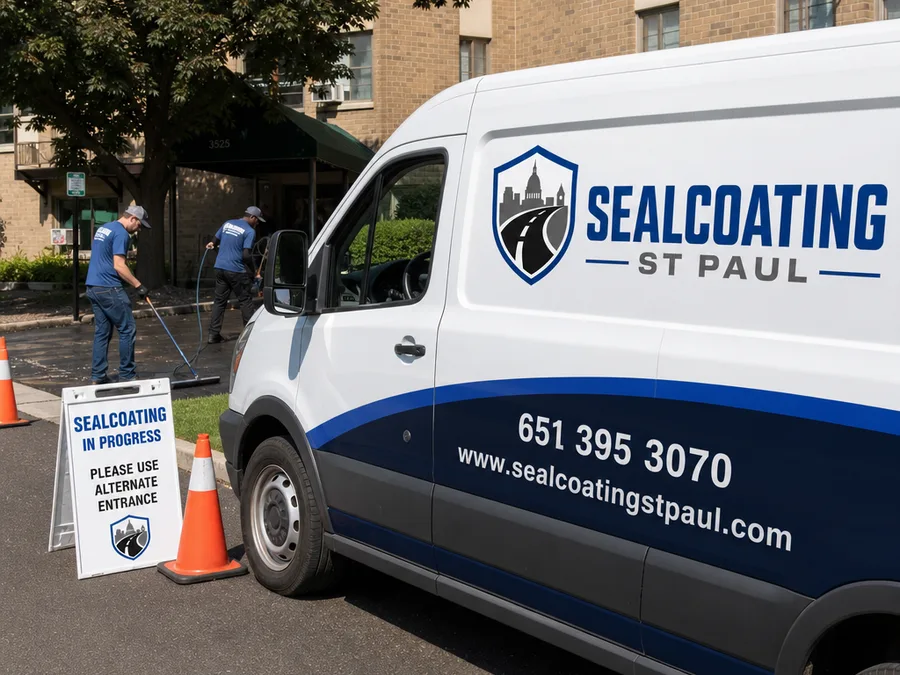
You'll see the cleaning, the edge work, and the crack attention before the main coat goes on. Adhesion depends on prep, not just the product.
Serving Saint Paul, Minnesota & surrounding areas
Calls are answered 24/7
Protect your asphalt from water, salt, and sun with a clean, even application and a work plan that fits Minneapolis driveways, lots, and busy schedules.
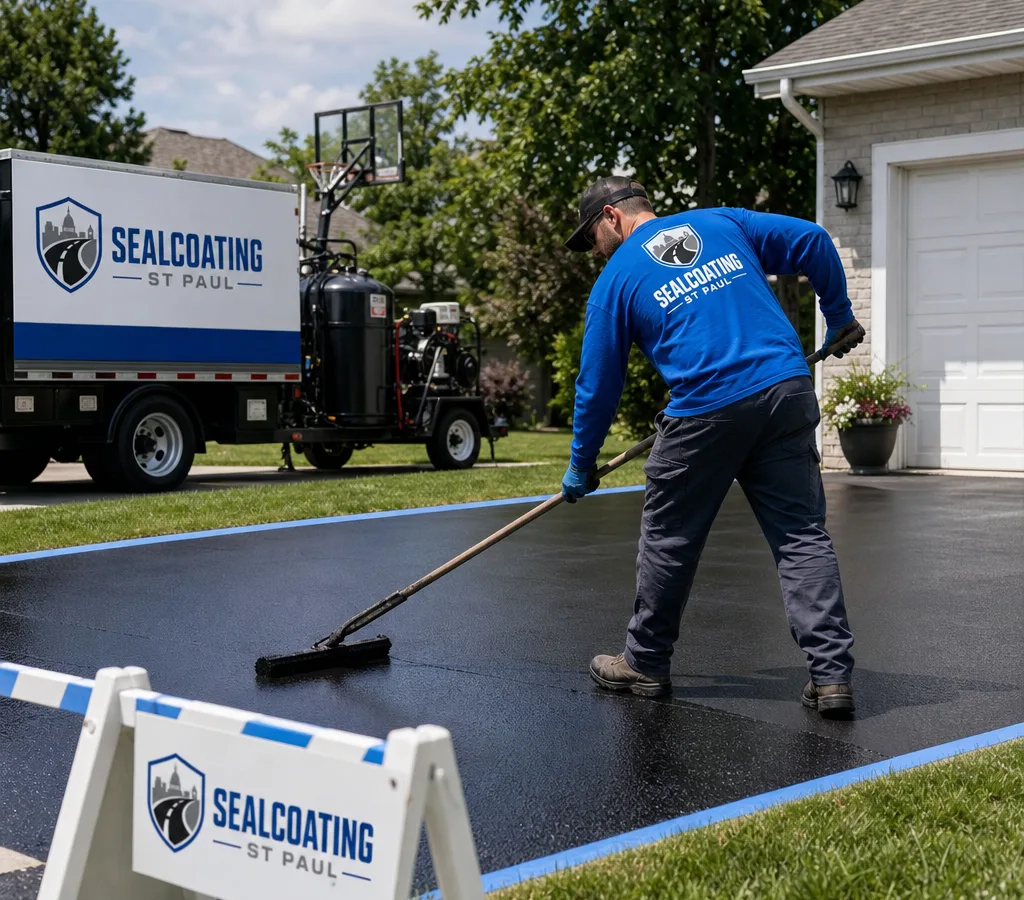
If you searched for sealcoating Minneapolis, you're probably looking at fading asphalt, hairline cracks starting to connect, or a driveway that soaks up water instead of shedding it. Sealcoating is a protective film that helps slow oxidation, reduces moisture intrusion, and gives your pavement a consistent finish.
In the Minneapolis area, asphalt takes a beating from freeze-thaw cycles, snowmelt, and de-icing salts tracked by tires. Those conditions don't just make pavement look old; they speed up raveling—the rough, grainy texture where aggregate loosens—and widen small cracks into pathways for water. Seal coating Minneapolis properties is a straightforward way to protect what you already have, as long as the surface is properly cleaned, prepped, and cured.
Sealcoating St Paul is based in Saint Paul at 292 N Walnut St, Suite 4, and we schedule work across the metro, including Minneapolis. A good Minneapolis sealcoating contractor should be willing to explain prep steps, drying expectations, and what sealcoating can and can't fix before any work starts.
Good driveway sealcoating Minneapolis projects start with surface condition. Sealcoat protects; it isn't a structural repair.
Typically included in asphalt sealcoating Minneapolis MN work:
Not included—and a contractor should say so clearly:
Our Saint Paul sealcoating team can walk you through what prep your specific surface needs before we schedule.
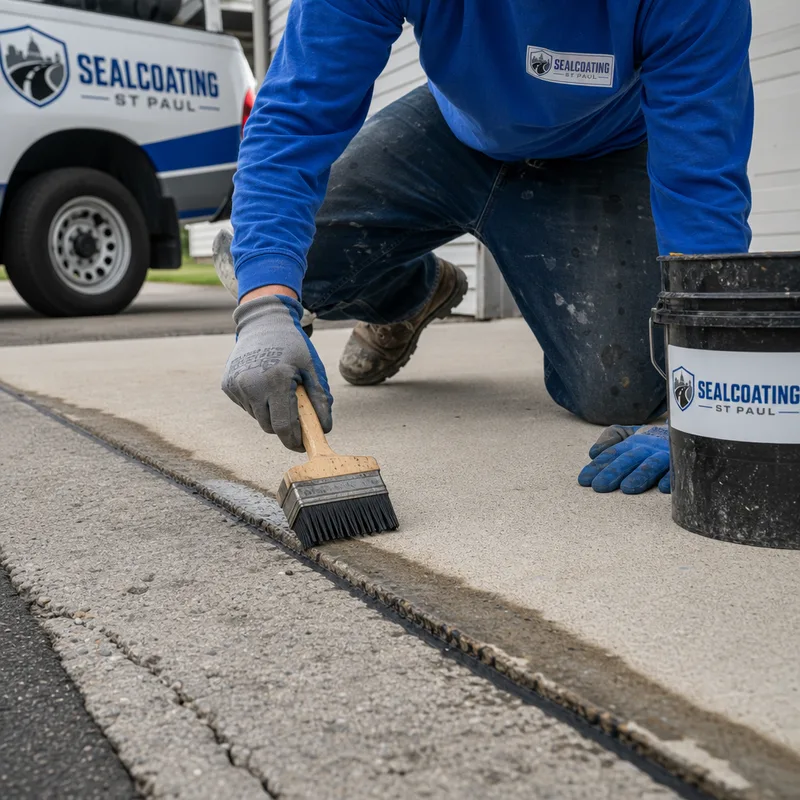
You'll see the cleaning, the edge work, and the crack attention before the main coat goes on. Adhesion depends on prep, not just the product.
We focus on consistent thickness and neat boundaries at concrete, pavers, and landscaping so the finish looks intentional.
Driveways and small lots still need a plan for parking and entry. We coordinate timing so you know when the surface is off-limits.
We'll tell you up front where sealcoating helps most and where repairs or patching may be needed first to avoid wasting money.
From single-family driveways to small multi-family parking areas, the same fundamentals apply: clean, repair what's appropriate, coat, and cure.
We look at oxidation, surface wear, cracks, oil spots, and drainage patterns, then outline what prep and crack work makes sense before coating.
We clear debris and sand, protect adjacent concrete and surfaces, and define edges so the finish doesn't wander into sidewalks or garage floors.
Cracks are prepared and filled where appropriate. This step matters because sealing over open cracks still leaves a water path underneath.
We detail edges first, then apply a uniform coat across the asphalt for consistent coverage and appearance.
We set clear expectations for when foot traffic and vehicles can return. Temperature, sun, and humidity all affect drying time in the Twin Cities.
Sealcoating in Minneapolis typically ranges from about $300 to $900 for most residential driveways, with small, straightforward driveways at the low end and larger or multi-car, irregular layouts higher. Larger driveways and small lots often land around $900 to $2,500+. Small commercial areas and larger parking lots are usually priced by square footage after an on-site look.
Final pricing depends on total area, crack filling needs, surface condition such as oxidation or raveling, access for equipment, and how much cleaning or masking is required around concrete and landscaping. The exact cost is confirmed after a brief site visit so the scope matches the pavement's condition.
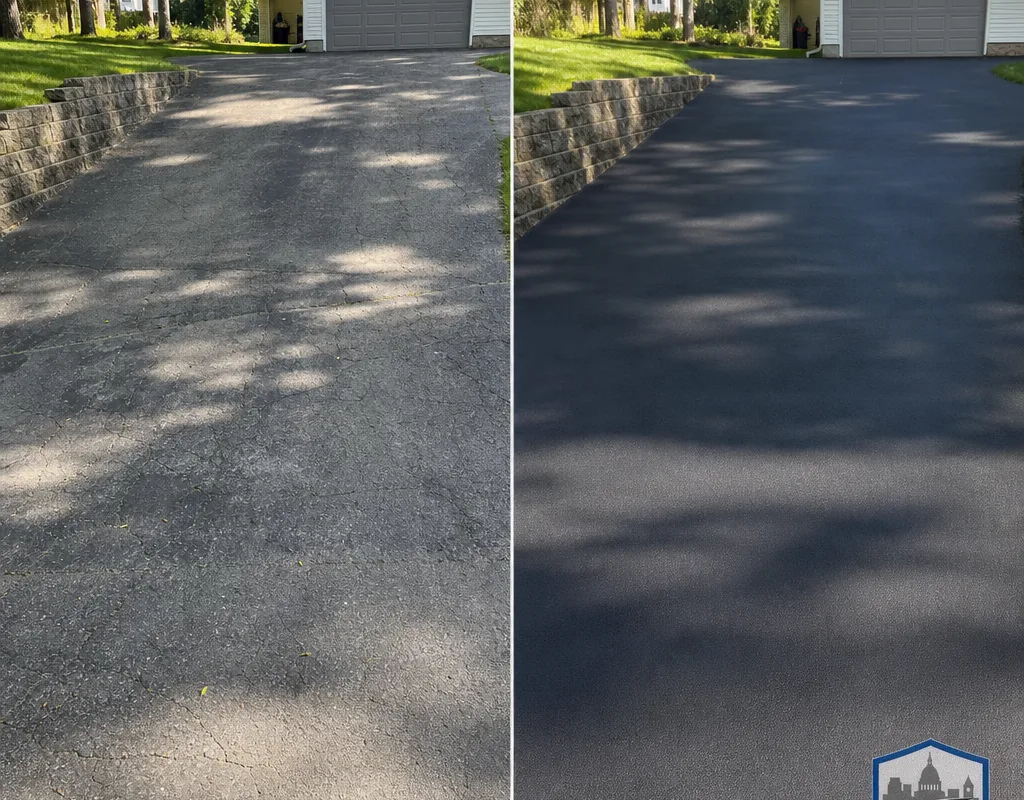
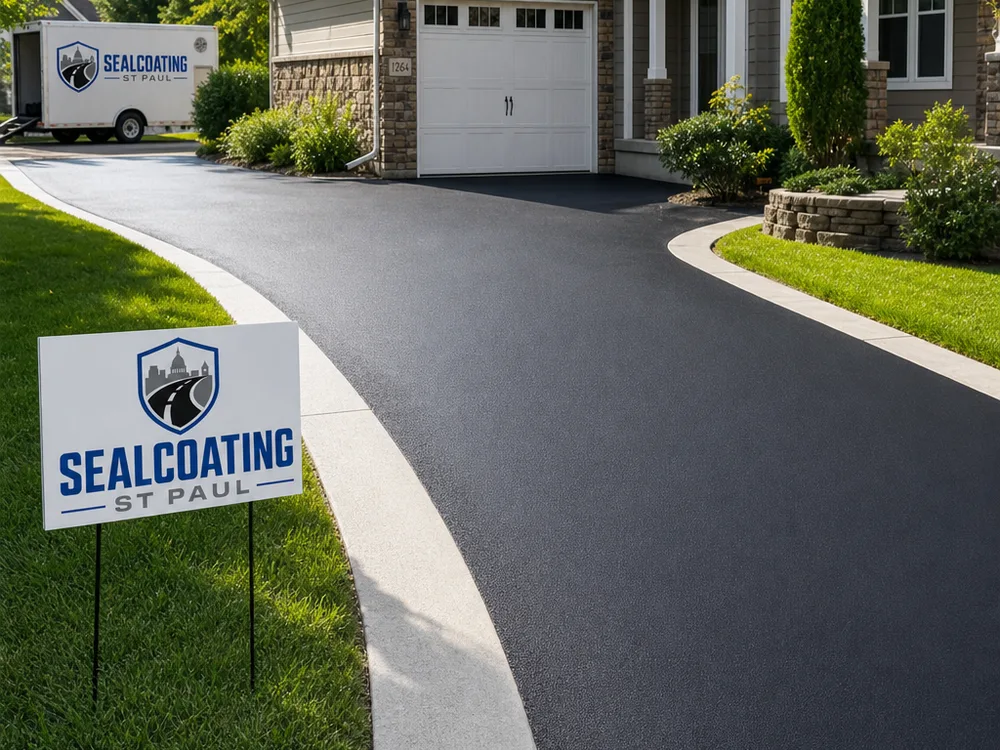
Most driveways need at least a full day before vehicle traffic, and longer if conditions are cool, humid, or shaded. Minneapolis weather swings can slow curing, so we give a realistic reopen plan based on the forecast and the amount of sun the pavement gets.
Yes, cracks should be treated before sealcoating because the coating alone will not bridge open gaps in a durable way. Crack filling reduces water entry under the coating, which matters in Minnesota where freeze-thaw cycles can quickly widen untreated cracks.
It depends on how heavy the staining is, but oil contamination can prevent bonding and may bleed through the finish. We'll point out any areas that need extra cleaning or spot treatment so the sealcoat adheres instead of peeling prematurely.
Sealcoating is best when the pavement and air temperatures are warm enough for proper curing and there's a dry window in the forecast. In the Twin Cities, that generally means planning for the warmer months and avoiding periods when nights are too cool or rain is likely.
No, sealcoating does not fix potholes, base failure, or settled sections because those are structural problems. If we see depressions that hold water or areas that are breaking apart, we'll explain what repair should happen first so the coating isn't applied over a failing surface.
Choose someone who explains prep in plain terms, points out crack and drainage issues before quoting, and gives a clear cure-time plan so you don't damage the finish. A reliable contractor will also be straightforward about what sealcoating can't solve and what should be repaired first.
Share a few details about your driveway or lot, and we'll recommend the right prep, outline the scope, and schedule service around weather and access so the finish cures the way it should.
Request a quote
Send the form and we will get back to you with next steps and a time for an on-site walkthrough.